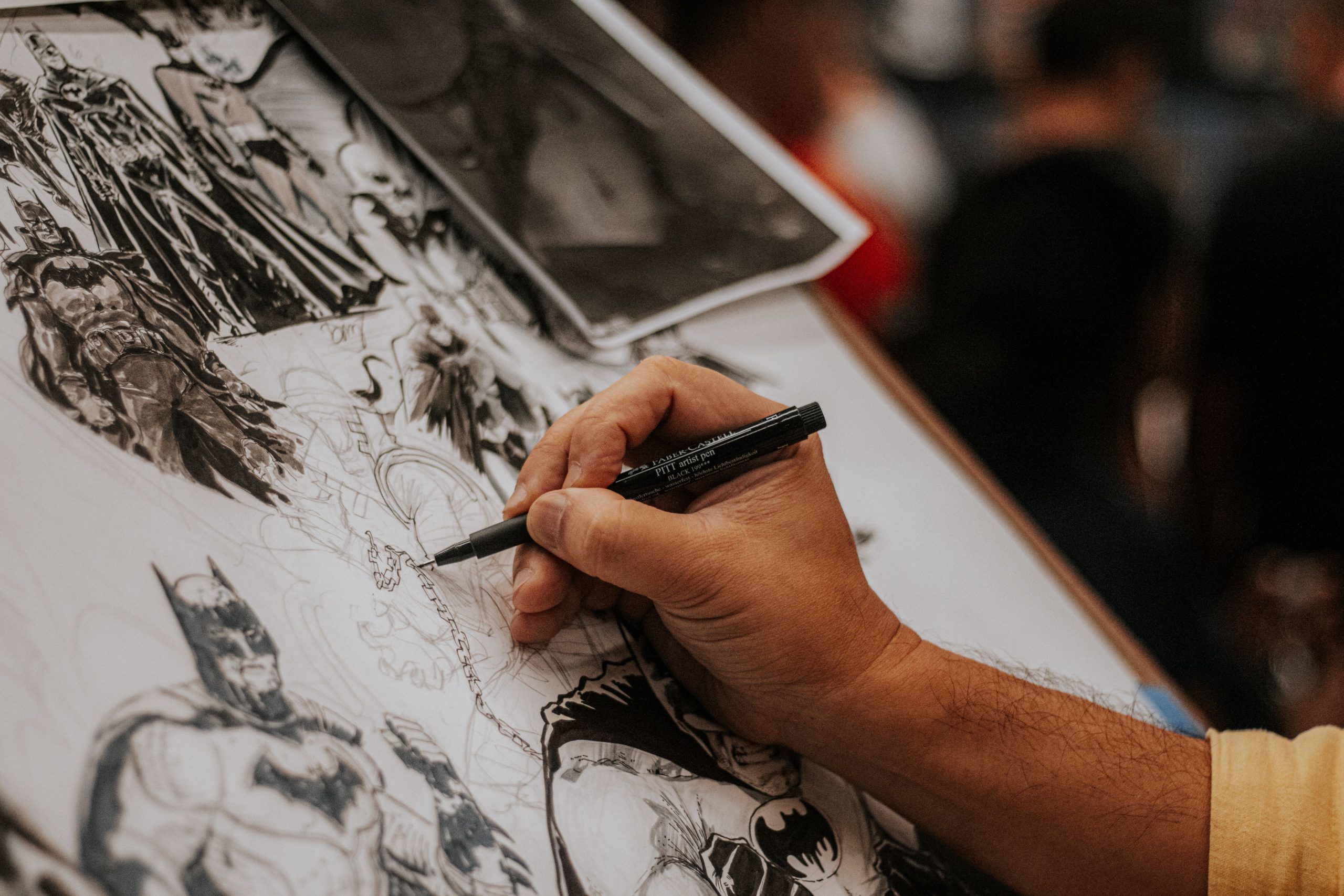
Open a comic page, zoom into the hands, count the fingers, check whether the background held still between panel two and panel five, and you may feel a small thrill of certainty. You have found a tell. You post the crop. Somebody replies that they ran the same page through an AI detector and the score came back high. By dinner the artist’s name is circulating with the word “fraud” attached to it.
The certainty is usually borrowed. AI detection on comic art is a probabilistic guess stacked on top of an accusation that carries real money, real contracts, and real reputations. The guess is sometimes right, and the problem is that almost nobody selling the guess will tell you how often it is wrong.
This is where the fight actually sits, and it is stranger than the headlines suggest. The technology people are using to police AI art is weakest exactly where comics spend most of their energy: in sequence, in deliberate style shifts, and in the ordinary working methods that have always left odd fingerprints on a finished page.
What an AI detector actually looks at
Every serious detector draws on two kinds of evidence, and they are not equally strong.
The first is file-level. Many generated images ship with embedded markers: EXIF software tags, invisible watermarks such as Google’s SynthID, or C2PA Content Credentials, a cryptographically signed manifest that records the tool that made the file and every edit since. When that evidence is present and intact, the question of whether an image came from a model can be answered with near certainty in milliseconds.
That evidence is also trivially destroyed. Upload the file to Instagram, take a screenshot, run it through a re-encoder, and the manifest is gone. The pixels carry nothing. This is why the strongest detector signal is usually missing from the version of the page a fan actually found on a social feed.
The second kind of evidence is visual. With no metadata to read, the detector falls back on statistics: frequency content, noise patterns, the particular smoothness diffusion models leave behind, the texture GANs used to leave behind. Those signals are real, but they are probabilistic, and they depend heavily on the generator, the compression, and how much editing happened after generation.
The same split shows up on the text side of a comic. When a publisher suspects that a script, or the lettering, was machine-written, a text-side AI detector can be run over it in seconds. It returns a number. It cannot tell you whether the jokes were written by a tired human at two in the morning, only that the phrasing lines up with patterns the model has seen before. Useful as a screening nudge, close to worthless as a verdict.
The “tells” were never tells
Here is the part that the loudest threads skip. Comics are sequential art, so almost every visual cue people use to “spot AI” is also produced by the medium itself and by the tools human artists have used for decades.
A background that changes between panels is not evidence of a model. It is evidence that the camera moved. A character who looks slightly different in panel seven than in panel one is what a page drawn over three weeks, by a fallible person, sometimes looks like. Detail blur is an artifact of a diffusion upscale, and it is also what a soft brush, a low-resolution reference photo, and a fast deadline produce.
Then there are the processes that genuinely mimic generation. Photobashing, where an artist composites photos and paint into a scene, leaves colliding geometry and mismatched lighting. The clone stamp tool duplicates objects with telltale repetition. A studio system, where several artists ink and color under one name, produces exactly the inconsistent line weight that sparked suspicion in the Mike Deodato case. 3D reference and photo reference can make a figure look “too smooth” to a viewer who has never drawn a page.
In 2026 the art book for Spider-Man: Brand New Day was accused of AI after a page of New York concept art showed taxis and buildings colliding. The publisher’s answer was that the page was made with the clone tool and photobashing, admitted it was lazy, and denied AI. Nobody disputed the artifacts. The entire argument was about which cheap process made them, and no viewer could tell from the printed page. An anti-AI policy is a statement of intent. What that page needed was a receipt: retained layer stacks, source plates, a delivery log per freelancer.

Four accusations, four different endings
The pattern in the last two years is not “AI is everywhere in comics.” It is that a small number of real incidents and a much larger number of false ones are being litigated in public with the same tools. Look at how differently these played out.
| Case and date | The accusation | What actually surfaced |
|---|---|---|
| Stanley “Artgerm” Lau, January 2026 | Marvel and DC cover art “looks AI” | Lau posted sketch-to-finish timelapses; the likely cause is that models were trained on his style, not that he used them |
| InHyuk Lee and Will Jack, 2024 | Cover illustrations flagged as generated | Lee showed the art dated to 2015, before modern generators; Will Jack’s accusers cited a detector score as their proof |
| Mike Deodato, Ultimate Oz, January 2026 | Interior panels inconsistent in style and anatomy | Deodato denied it and posted process videos; cover artist David Aja left the book citing a no-AI contract clause |
| University of Dundee and Katy Stone, March 2026 | Navigating Menopause in the Workplace comic used AI | Stone denied it and posted layout sketches; the accuser cited panel-to-panel tells and a detector that returned 100% |
| Marvel, Brand New Day art book, 2026 | Concept art contained generated elements | Publisher blamed the clone tool and photobashing, denied AI, and provided no audit trail |
Source note: cases reported by Bleeding Cool, Publishers Weekly, The Clarity, and iTech Post between July 2024 and August 2026.
Notice how many of those disputes end without a clean answer. The one case with the strongest smell, the Dundee comic, still rests on visual tells that a human studio could have produced. My read is that the Dundee accusers are probably right about the art, and still wrong about the method. “This looks like AI to a professional” and “a detector returned 100%” are not the same claim, and neither is proof.
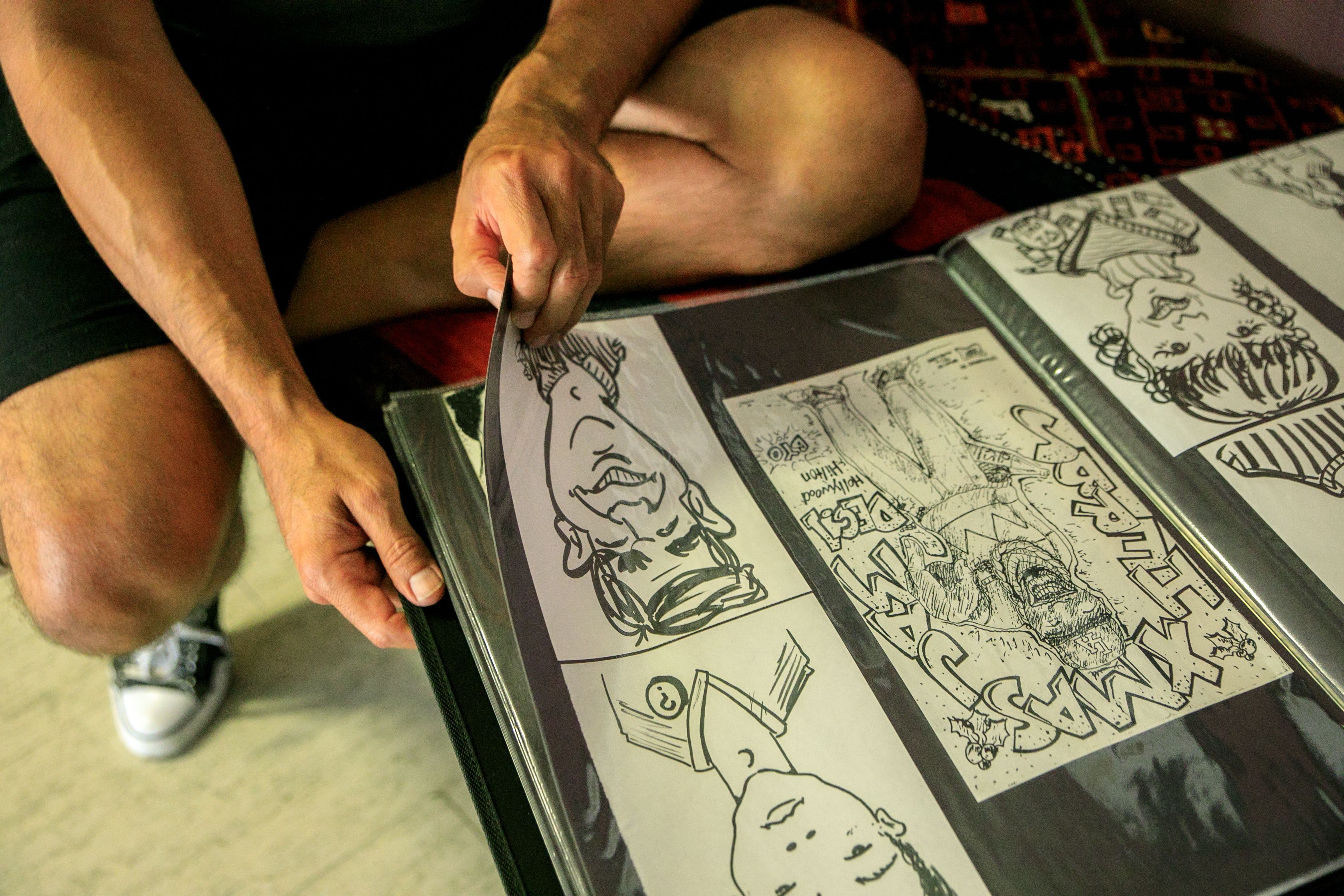
What the detector research actually shows
If you want the sober version of this debate, ignore the leaderboards and read the false positive rates. In a 2024 study that tested automated detectors against human art alongside AI images, the best commercial system, Hive, hit 98.03% accuracy with a 0% false positive rate on human artworks. The next two were a different story: Optic misclassified 24.47% of human artworks as AI, and Illuminarty misclassified 67.4%. In the same study, professional artists hit 75.32% accuracy and expert artists 83%, while the general public in a separate 2025 experiment performed at roughly 50%, or coin-flip level.
Now the harder number. A 2026 zero-shot evaluation of 16 detection methods across 12 datasets and about 2.6 million images found no universal winner, a 37 percentage-point gap between the best and worst detector, and a sharp decline against modern commercial generators. Flux Dev, Firefly v4, and Midjourney v7 defeated most detectors, averaging only 18 to 30% detection accuracy. Older generators such as ProGAN and StyleGAN2 were still caught at 87% and 82%. Detection is losing ground to generation, not winning.
There is a real opposing view here, and it deserves a fair hearing. Security researchers behind the NTIRE 2026 challenge built a benchmark of more than 250,000 images from 42 generators and 36 image transformations, and the top teams reported robust ROC AUC scores above 0.99. Their argument is that detection is improving quickly and that abandoning it is premature. Fine, but a benchmark image is clean, labeled, and collected on purpose. A fan’s screenshot of a compressed Instagram post is none of those things. Even a 1% false positive rate is intolerable when the output is a public accusation that can end a contract.
Provenance beats pixel-sniffing
I think the score is the problem, not the art. A detector compresses a complicated forensic question into a single percentage that reads to a stranger as a verdict, and almost nobody who shares that percentage understands the difference between the visual signal and the metadata signal underneath it.
The more useful direction is provenance. C2PA, the open standard behind Adobe’s Content Credentials, lets a camera, a drawing app, or a generative tool attach a cryptographically signed record of what produced a file and what happened to it afterward. The C2PA specifications describe it as a tamper-evident manifest, and crucially, it flags AI actions explicitly through a digital source type field. When it is present and signed, you do not have to guess. You check.
The catch is that provenance only works if the chain survives, and most of the modern web destroys it. Direct messages, screenshots, and social uploads strip the manifest. C2PA also proves only that a file has not been altered since its last signature; it does not prove the scene was real or the artist was honest. It answers the question “what tool made this and when,” which is narrower than people assume and far more checkable than a vibe.
What I would do if I ran a publisher
Stop treating a detector percentage as evidence. A number in the eighties from a system with a documented 24 to 67% false positive rate on human art is not a finding, it is the start of a conversation. The 2024 human-versus-AI art study and the zero-shot benchmark both point the same way: no single automated verdict is robust across styles and generators, and human judgment is accurate but biased toward false positives.
Ask for the working files, not the finished JPEG. Layered source files, timelapses with a visible history, and contractual delivery logs are checkable in a way that a screenshot never will be. Make provenance a submission requirement and keep it, because the credit line is only as good as the audit trail behind it.
And be honest about the false-positive tax. When a real artist is accused of using AI and has to post timelapses to clear their name, that is unpaid labor, and the accusation is often unrecoverable even after the denial. The copyright stakes are just as unresolved: the US Supreme Court declined in March 2026 to hear the case over whether fully AI-generated art can be copyrighted, after the Copyright Office refused to register it for lacking a human creator.
FAQ
Can an AI detector prove a comic panel was AI-generated?
No. It can flag a file using embedded provenance or statistical patterns and return a probability. File-level evidence can be close to conclusive when a valid C2PA manifest is intact. Once a page has been screenshotted or re-encoded, that evidence is gone and the verdict becomes a guess.
Why do AI detectors flag real comic artists?
Because the tells overlap with legitimate tools. Photobashing, clone stamp, 3D reference, and studio production all leave inconsistent backgrounds and blurred detail. Detector false positive rates on human art range from 0% to 67.4% depending on the system, per a 2024 study.
Are six-fingered hands still a reliable sign?
Less than people assume, and comics have drawn strange hands for a century. Inconsistent anatomy is a weak signal on its own. It means something only alongside file-level evidence or a documented workflow.
Do detectors work on new generators like Midjourney v7 or Firefly v4?
Often not. In a 2026 zero-shot benchmark, the best detector averaged 75% accuracy overall but dropped to 18 to 30% against modern commercial generators, while older models like StyleGAN2 were caught about 82% of the time.
What is C2PA and does it solve this?
C2PA is an open standard for cryptographically signed provenance, the technology behind Adobe Content Credentials. It is strong when present and intact, does not survive most social platforms or screenshots, and authenticates a file’s history rather than the truth of what it depicts.
What should a publisher do instead of running an accusation through a detector?
Request working files. Layered source files, timelapses with visible history, and signed provenance are checkable. A detector score is not, and treating it as one is how working artists get hurt.
How this article was put together
I based the detection statistics on peer-reviewed and preprint studies published between 2024 and 2026, including a large zero-shot detector benchmark and a human-versus-AI art study, and on the C2PA specification. The case details come from contemporaneous reporting by Bleeding Cool, Publishers Weekly, The Clarity, and iTech Post. Where no named party confirmed a claim, I say so rather than assert it. Detector accuracy against new generators is moving fast, so treat every percentage here as a snapshot of 2026 and recheck it before relying on it.